

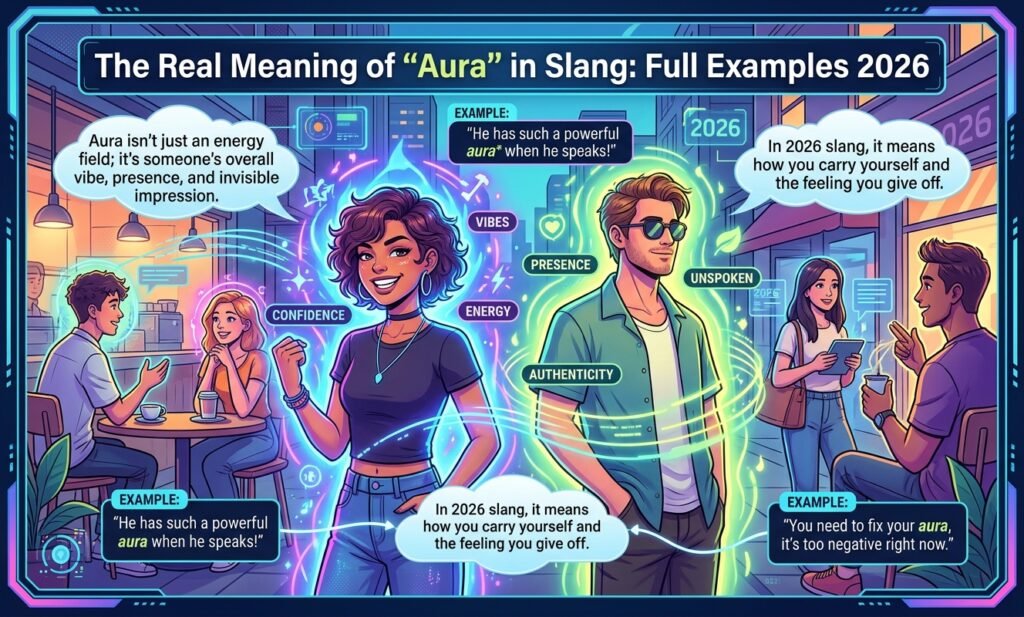
“Aura” used to describe a person’s energy or vibe. Now it means something bigger in slang. It’s tied to points, style, and social status online.
In 2026, people say things like “aura points” a lot. Doing something cool can add to your aura. Doing something embarrassing can take aura away.
The word blends old and new meanings together. It still means presence and personal energy. But now it’s also a fun way to track social wins and losses.
Understanding the Slang Meaning of Aura
In slang, “aura” describes someone’s overall presence, charisma, or “cool factor.” It’s about how a person comes across to others, not one single thing they did.
To have aura means you carry:
- Confidence that feels effortless
- A memorable, magnetic presence
- Style or charisma that stands out
- A vibe that lingers even after you leave the room
Where the Slang Version of Aura Comes From
The word originally described a spiritual or emotional energy field said to surround a person. That older meaning still exists, especially among people interested in energy and wellness.
The slang version took shape in online sports culture. Around 2021 and 2022, fans on social media started using “aura” to describe athletes who displayed calm, unbothered dominance. If a player hit a big shot without even reacting, fans would describe it as pure aura. From there, the word spread into everyday internet slang.
Why “Aura” Became a Viral Slang Term
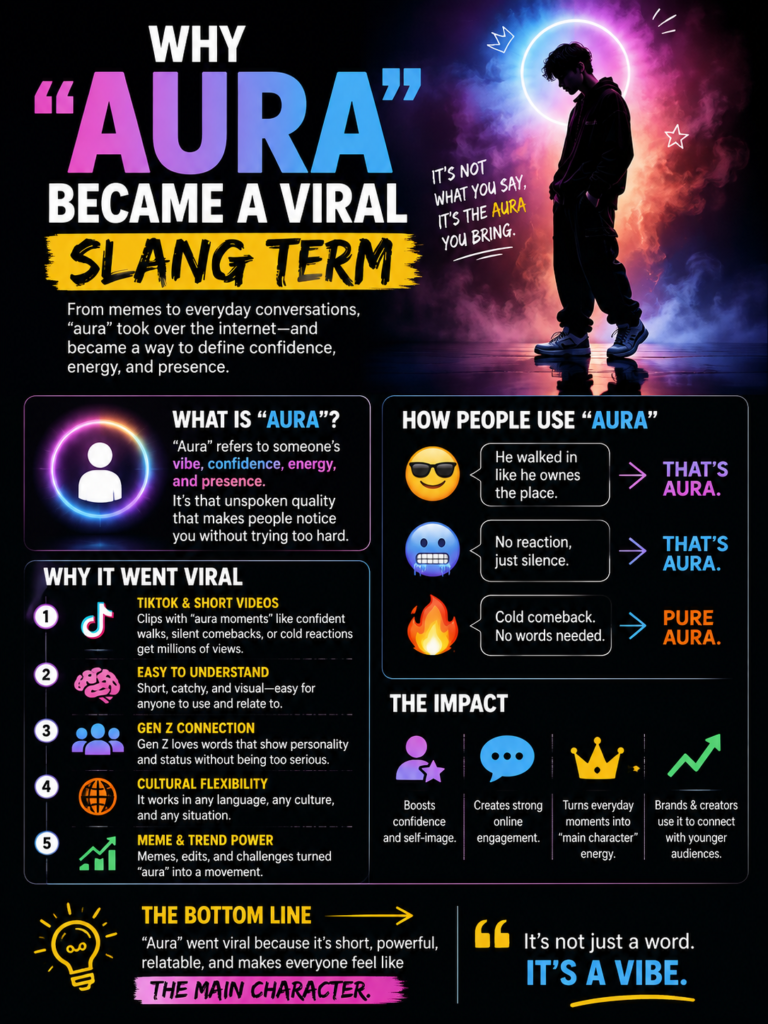
“Aura” went fully viral thanks to a trend where people jokingly assigned point values to everyday moments. A smooth, confident action might earn someone “+10,000 aura,” while an awkward stumble could cost “-3,500 aura.” This playful scoring system made the word fun, visual, and easy to use in daily conversation.
Its flexibility helped too. “Aura” can describe a person, an outfit, a photo, or even a single moment, which is part of why it spread so fast across platforms.
The Emotional Side of the Word Aura
Confidence and Self-Image
For many people, talking about “aura” is really about confidence. Gaining aura points feels like a small win, while losing them can feel like a light, joking form of embarrassment.
Playful Self-Awareness
Most aura talk is meant to be funny, not harsh. People use it to laugh at themselves as much as to compliment others, which keeps the tone light rather than mean-spirited.
Different Types of Aura in Slang
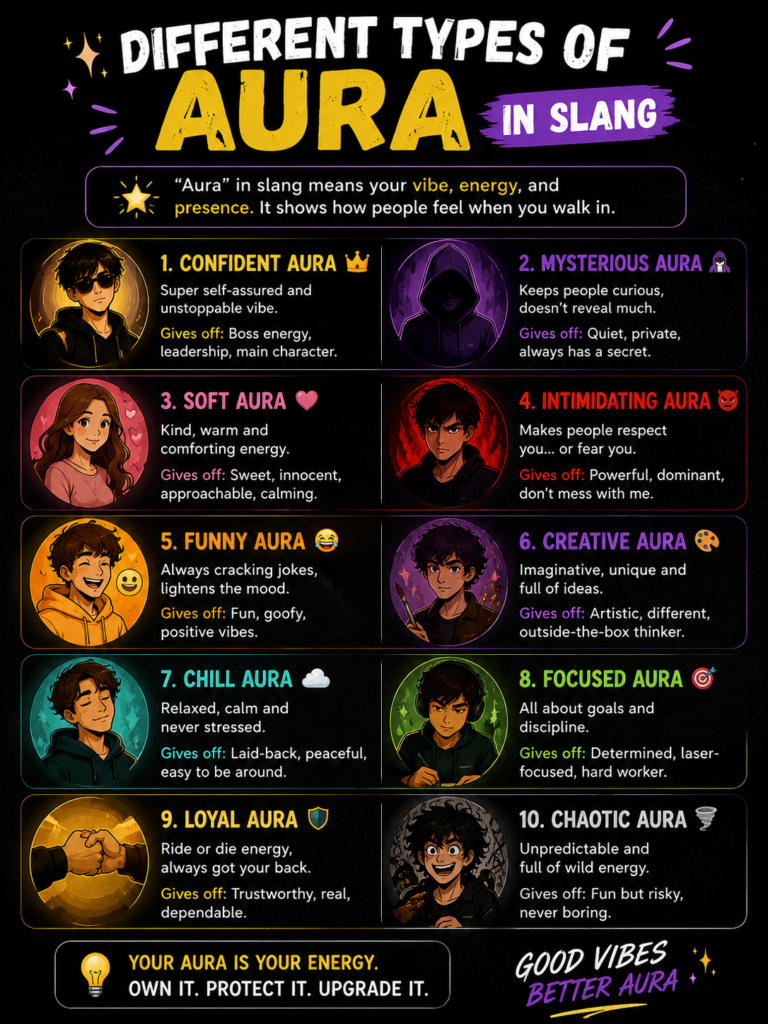
- Confident aura calm, unbothered energy
- Stylish aura strong fashion or aesthetic presence
- Funny aura humor that leaves a lasting impression
- Awkward aura a cringe or embarrassing moment (aura loss)
- Dominant aura commanding presence, often used in sports or gaming
What Aura Means According to Modern Youth Culture
For Gen Z and younger audiences, “aura” works almost like an internet-native personality score. It’s used across TikTok, Discord, gaming chats, and Instagram to react to how someone looks, acts, or performs in the moment. The meaning stays consistent across platforms: it’s always about the impression someone leaves behind.
How Aura Differs From “Vibe”
These two words get used interchangeably, but they aren’t identical.
| Term | Focus | Example Use |
| Aura | Personal presence and impression on others | “He walked in with pure aura.” |
| Vibe | General mood or atmosphere of a moment | “This party has a chill vibe.” |
Aura is more personal and tied to an individual. Vibe is broader and can describe a place, a song, or a shared moment.
Real-Life Example Sentences Using Aura in Slang
- “That outfit gave major CEO aura.”
- “Bro tripped in front of everyone, aura points gone.”
- “Her confidence on stage was pure aura.”
- “This gameplay is unmatched, your aura is insane right now.”
What Shapes Someone’s Aura?
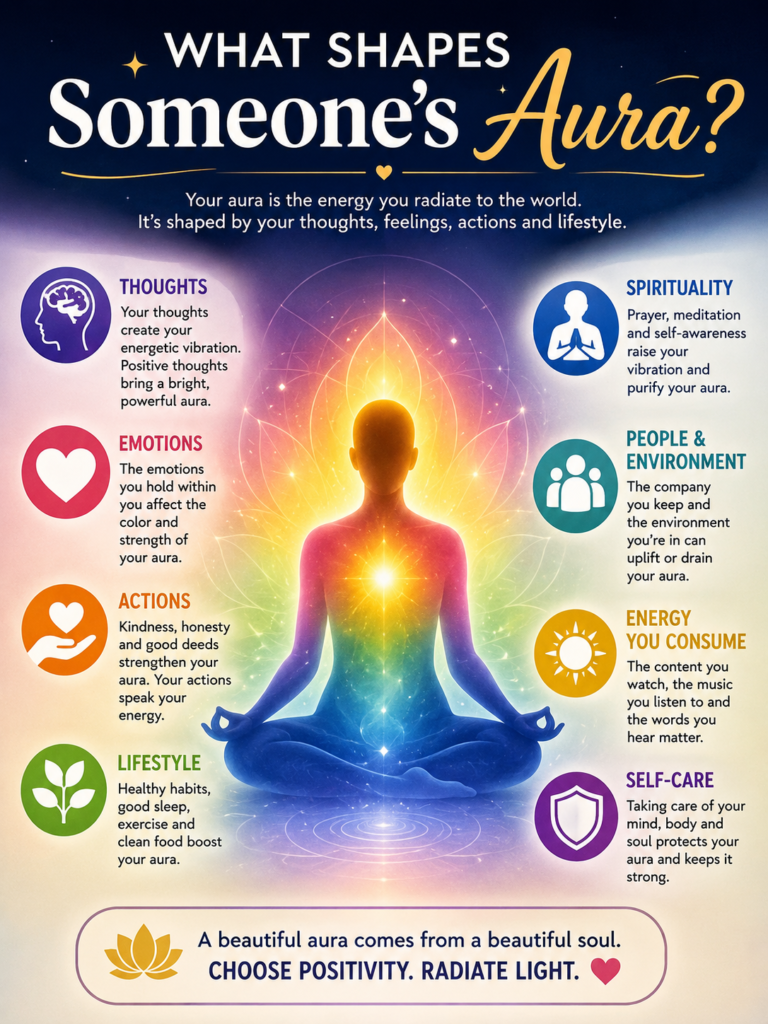
Several small factors combine to shape how someone’s aura reads to others:
- Confidence how calm and self-assured someone appears
- Body language posture, movement, and presence
- Style clothing, aesthetic, and personal choices
- Reactions how someone handles wins, losses, or awkward moments
- Consistency whether their presence feels genuine over time
Signs You Have a Strong Aura
- People remember you after a short interaction
- You stay calm during embarrassing or high-pressure moments
- Your style or personality feels distinct and consistent
- Others describe you as confident without you trying too hard
How “Aura” Shows Up in Pop Culture
Athletes are some of the most common examples used in aura discussions. Fans often describe elite performers as having “unmatched aura” when they display calm dominance under pressure. The same idea applies to musicians, streamers, and public figures whose presence feels bigger than any single moment or achievement.
Examples of Different Auras (Table)
| Aura Type | Description | Example Trigger |
| Confident Aura | Calm, self-assured energy | Staying composed under pressure |
| Stylish Aura | Strong fashion or aesthetic presence | A bold, well-put-together outfit |
| Funny Aura | Humor that leaves an impression | A well-timed joke or reaction |
| Awkward Aura | Cringe or embarrassing moment | Tripping or an awkward pause |
| Dominant Aura | Commanding, unbothered presence | A clutch win in sports or gaming |
Also Read OF Meaning On MeaningPeak.com
Why Aura Slang Matters in Communication
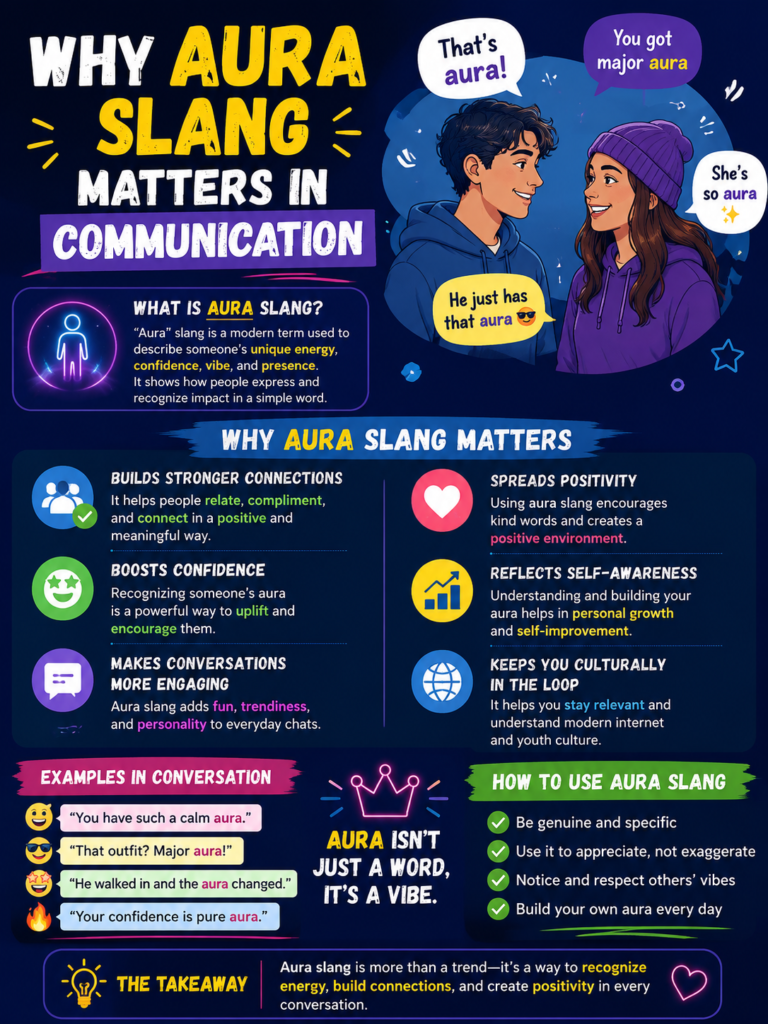
Understanding “aura” helps decode a huge chunk of casual online conversation. It’s used in captions, comments, gaming chats, and texts as a quick way to react to confidence, style, or awkwardness. Knowing the term prevents confusion, especially across different age groups navigating the same platforms.
How to Improve Your Aura (Slang Perspective)
- Stay calm during embarrassing or high-pressure moments
- Build a consistent personal style
- Avoid overreacting to small wins or losses
- Let your actions speak instead of seeking constant approval
Why People Love Describing Auras
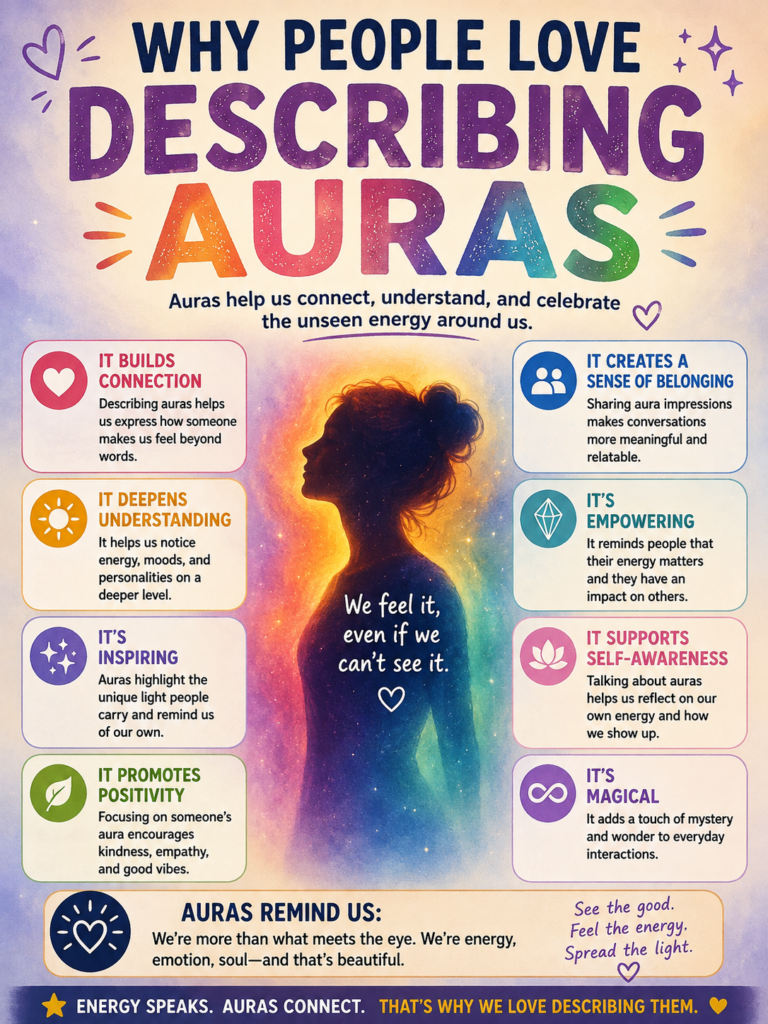
Aura slang gives people a fun, low-stakes way to talk about confidence and presence. It turns everyday moments into something shareable and funny, whether someone’s gaining points for a smooth win or losing them for a small stumble. The humor keeps it approachable, even when the underlying compliment is genuine.
How Aura Is Used in Compliments
- “Your aura is unmatched today.”
- “This fit has such a strong aura.”
- “You walked in with main character aura.”
- “That comeback had pure aura energy.”
FAQs
What does aura mean in slang?
It describes a person’s overall presence, charisma, or the impression they leave on others.
What are aura points?
They’re a joking, made-up scoring system used to describe gaining or losing social “coolness.”
Where did aura slang come from?
It started in online sports culture around 2021-2022 before spreading across social media.
Is aura the same as vibe?
Not exactly. Aura focuses on a person’s presence, while vibe describes a broader mood or atmosphere.
Is aura always used seriously?
No, it’s often playful and humorous, though it can also be a genuine compliment.
Conclusion
So “aura” now means more than just energy. It’s tied to points, confidence, and social image. The meaning shifts depending on tone and situation.
In 2026, it’s used seriously and jokingly both. People track wins and losses like a game. Context always decides what “aura” really means.

Hi, I’m an SEO specialist with a strong passion for digital marketing and search optimization. I focus on understanding how search engines work and how websites can improve their visibility through effective SEO strategies.
I enjoy working with data-driven approaches, including keyword research, on-page optimization, technical SEO, and content strategy. I believe every website has the potential to grow and reach new heights with the right techniques and consistent effort.
I value continuous learning and always stay updated with the latest trends and best practices in the digital world. My goal is to keep improving my skills and knowledge while exploring new opportunities in the field of SEO.
