

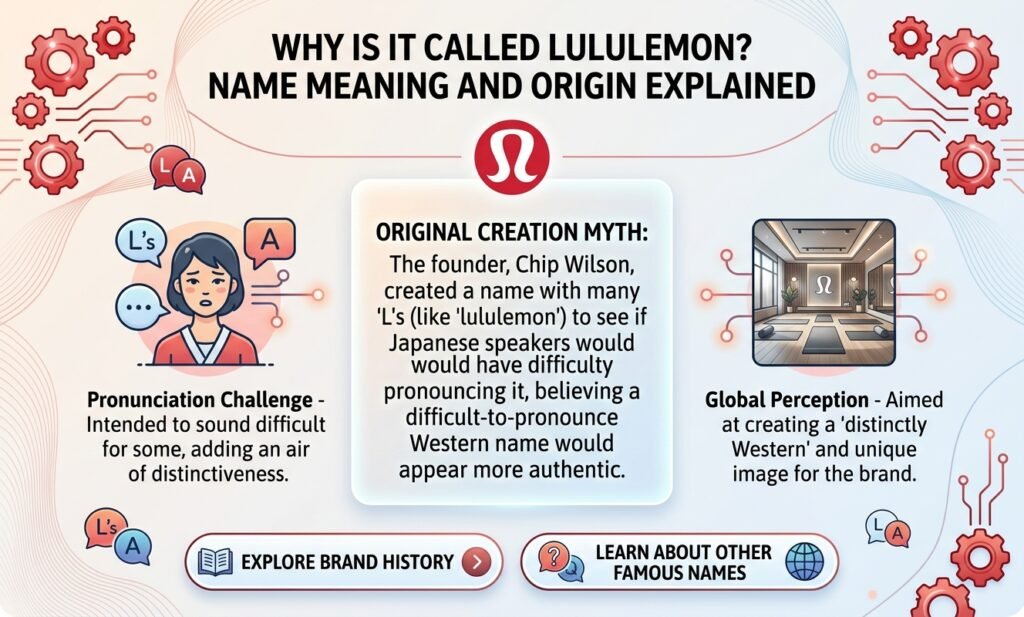
Ever wondered why the brand is called Lululemon? It’s a name people recognize everywhere, but few know its story. The name actually has an interesting background.
Lululemon wasn’t picked randomly. The founder chose it for a specific reason tied to branding and pronunciation. There’s even a fun theory behind the “L” sound in the name.
Understanding the name’s origin gives you a new appreciation for the brand. It shows how much thought can go into a simple name. Once you know the story, it’s hard to forget.
What Is Lululemon?

Lululemon is a Canadian athletic apparel company known for yoga pants, leggings, and technical activewear. It was founded in 1998 in Vancouver by Chip Wilson, who built the brand after discovering yoga and noticing a gap in the market for high-quality, performance-based yoga clothing.
Since then, the company has grown into one of the most recognizable names in the athleisure industry, known for premium pricing, loyal customers, and a strong brand identity built around fitness and wellness culture.
Why Is It Called Lululemon?
The short answer: the name was invented. It has no dictionary meaning, no connection to yoga, and no hidden translation in any language. Chip Wilson created it as a marketing tool, built specifically around sound rather than meaning.
Main Reasons Behind the Name
- It contains three “L” sounds, which Wilson believed made it feel distinctly North American
- The letter “L” doesn’t exist in Japanese phonetics, making the name feel foreign and appealing to Japanese consumers
- It was designed to sound catchy, modern, and easy to remember
- It stood out from typical fitness brand names that focused on strength or performance
History of the Lululemon Name
Before starting Lululemon, Wilson ran a skateboard and snowboard brand called Homeless, which found unexpected success in the Japanese market. He noticed Japanese buyers were drawn to the brand partly because of how the name sounded, especially the letter “L,” which isn’t part of the Japanese sound system.
That observation stuck with him. When it came time to name his yoga apparel company, he leaned into the same idea, building a brand name loaded with “L” sounds on purpose.
Who Named Lululemon?
Chip Wilson, the company’s founder, is the person behind the name. He wasn’t working with a branding agency or focus group in the traditional sense. Instead, the name came out of his own market observations and experimentation with different word combinations.
also read wyo meaning on Meaningpeak.com
Story Behind the Lululemon Brand Name
According to accounts from Wilson himself, the naming process involved testing multiple options before settling on Lululemon. Reports suggest he presented a shortlist of possible names to a group of people and let reactions guide the final decision, with Lululemon winning out over more literal alternatives like “Athletically Hip.”
The chosen name had no real-world meaning attached to it. It was built purely for branding impact, not for describing the product or the company’s mission.
Why the Letter “L” Was Used
The repeated “L” sound is the most talked-about part of the name, and it wasn’t accidental.
Reasons
- The “L” sound doesn’t exist in the Japanese language
- Wilson believed this made the name feel authentically Western
- A name a Japanese marketing firm wouldn’t naturally create felt more genuine to Japanese shoppers
- Multiple “L” sounds made the name feel unique compared to competitors
Psychological Reason Behind the Name

Beyond sound alone, there was a psychological angle to the strategy. Wilson wanted the brand to feel imported, exclusive, and distinctly North American to international shoppers, particularly in Japan.
Psychological Strategy
- Foreign-sounding names can feel more premium to certain markets
- Unusual sounds create curiosity and memorability
- A name with no clear meaning invites people to associate it with quality over time
- Repetition (three Ls) reinforces recall, similar to rhyming or alliteration in advertising
Lululemon Brand Identity and Naming Strategy
Lululemon follows a naming approach used by several major global brands: choose a name for its sound and feel, then build meaning into it through marketing, product quality, and customer experience.
Branding Strategy
| Element | Purpose |
| Invented word | Avoids literal limitations, allows flexible brand growth |
| Three “L” sounds | Creates a distinct, memorable phonetic identity |
| No direct meaning | Lets the brand define itself through reputation, not definition |
| Simple pronunciation | Keeps the name approachable across markets |
This is the same logic behind brand names like Nike or Adidas, where the word itself doesn’t describe the product but becomes powerful through consistent branding.
Is Lululemon a Real Word?
No, Lululemon is not a real word in English or any other language. It was fully invented for branding purposes and carries no dictionary definition.
Examples
- It’s not a name, a place, or a translated term
- It doesn’t reference yoga, fitness, or wellness directly
- Its only defining feature is the repeated “L” sound
Lululemon Name Controversy
The name has drawn criticism over the years, mainly because of comments Wilson made explaining the Japanese pronunciation angle. Some viewed his explanation, that the name was partly designed because Japanese speakers would find an “L”-heavy word amusing or exotic, as insensitive or reductive.
This controversy has resurfaced periodically online, especially as older interviews and statements from Wilson continue to circulate on social media.
Global Expansion of Lululemon

Despite the naming controversy, Lululemon grew into a global athletic wear leader. What started as a single storefront in Vancouver expanded into a multi-billion-dollar company with locations across North America, Europe, and Asia.
Growth
- Started as one store in Vancouver in 2000
- Expanded rapidly through the 2000s and 2010s
- Became a publicly traded company on the stock market
- Built a large international customer base, including strong performance in Asian markets
Lululemon Logo and Brand Meaning
Interestingly, the brand’s now-iconic logo wasn’t originally designed for the name Lululemon at all. It was reportedly created for one of the other name options considered during the branding process, “Athletically Hip.” Even though the name changed, the logo stuck and became one of the most recognized symbols in activewear.
Why Lululemon Focused on Yoga Market

Wilson built the brand around yoga specifically because he saw a gap in the market for technical, well-designed apparel built for the activity, rather than repurposed gym clothes.
Reasons
- Yoga was gaining mainstream popularity in the late 1990s and early 2000s
- Existing activewear wasn’t designed with yoga’s movement and stretch needs in mind
- Wilson personally practiced yoga and understood the gap firsthand
- Premium, performance-focused fabric became a key differentiator
Timeline of Lululemon Growth
Timeline
- 1998 — Chip Wilson founds Lululemon in Vancouver, Canada
- 2000 — First flagship store opens
- 2007 — Lululemon goes public on the stock market
- 2013 — Wilson steps down from his executive role following controversial comments
- 2010s–2020s — Continued global expansion into new countries and product categories
Interesting Facts About Lululemon
- The name has three “L” sounds by design, not by accident
- The brand’s original logo was made for a different name entirely
- Lululemon’s signature fabric, called Luon, was developed specifically for yoga movement
- The company became known for a loyal, almost cult-like customer following
- Despite the name’s marketing origin, it has no literal translation in any language
Similar Brand Naming Examples
Lululemon isn’t the only brand built on invented or sound-driven naming.
| Brand | Naming Style |
| Nike | Named after the Greek goddess of victory, but built more on sound and symbolism than literal meaning |
| Adidas | Derived from founder Adi Dassler’s name, shortened for branding |
| Kodak | A fully invented word, chosen because it was short, memorable, and easy to pronounce globally |
| A playful misspelling of “googol,” chosen for its unique, brandable sound |
These examples show a common pattern: strong global brands often prioritize memorability and sound over literal meaning.
FAQs
Why is it called Lululemon?
Because founder Chip Wilson invented the name specifically for its sound, especially the repeated “L,” to appeal to North American and Japanese markets.
Does Lululemon mean anything?
No, it has no literal meaning in any language. It was created purely as a branding decision.
Who came up with the name Lululemon?
Chip Wilson, the company’s founder, created the name during the brand’s early development in the late 1990s.
Why does Lululemon have three L’s?
The three “L” sounds were intentional, designed to make the name feel distinctly Western and memorable, especially to Japanese consumers.
Is the Lululemon name controversial?
Yes, some of Wilson’s past comments about why the name appeals to Japanese consumers have drawn criticism over the years.
Conclusion
So, the name Lululemon has a clever story behind it. It wasn’t random, it was chosen with branding in mind. The founder had real reasons for picking those sounds.
Now you know why the brand sounds the way it does. It’s a small detail that makes the name more memorable. Next time you see it, the story will come to mind.

Hi, I’m an SEO specialist with a strong passion for digital marketing and search optimization. I focus on understanding how search engines work and how websites can improve their visibility through effective SEO strategies.
I enjoy working with data-driven approaches, including keyword research, on-page optimization, technical SEO, and content strategy. I believe every website has the potential to grow and reach new heights with the right techniques and consistent effort.
I value continuous learning and always stay updated with the latest trends and best practices in the digital world. My goal is to keep improving my skills and knowledge while exploring new opportunities in the field of SEO.
